
Winter is where this family’s four different migration strategies produce the most visible contrast — two species you can count on, one you can reasonably expect in many regions, and two that might fill your feeders by the dozen or simply never show up at all.
House Finch: Dependable Year-Round
House Finch stays put through winter across virtually its entire range, providing steady, reliable sunflower feeder activity regardless of what the irruptive species are doing farther north.
American Goldfinch: Drab but Present
Winter goldfinches have molted into the dull olive-brown plumage covered in our identification guide, making them considerably harder to pick out than their vivid summer selves, but they remain present and active at nyjer feeders throughout winter across most of their range.
Purple Finch: A Genuine Winter Visitor
For hosts across much of the eastern United States, winter is actually the best time to see Purple Finch, as migrants from northern breeding territory settle into wintering range and become regular, if not overwhelming, feeder visitors.
Pine Siskin and Common Redpoll: The Wildcard
This is where winter gets genuinely unpredictable. In an active irruption year, flocks of dozens of siskins or redpolls can appear at a nyjer feeder seemingly overnight. In a quiet year, following a good boreal seed crop, neither species may show up at all. See our migration guide for the mechanics behind this unpredictability.
Making the Most of an Irruption Winter
If forecasts or early sightings suggest an active irruption is underway, keeping feeders especially well stocked and adding capacity where possible helps take full advantage of what can be a genuinely rare, short-lived opportunity to host species that might not return again for several winters.
Mixed Winter Flocks
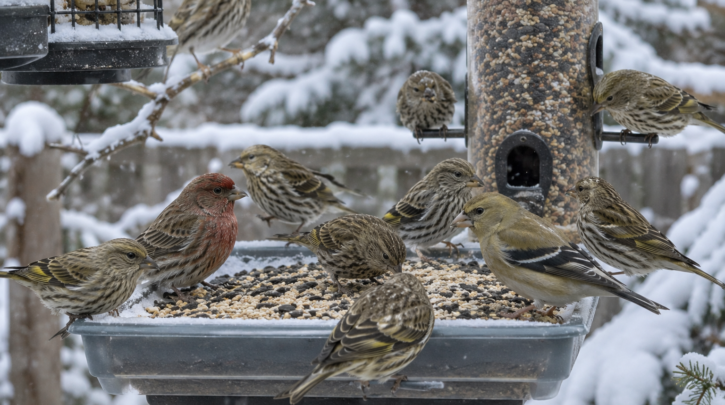
It’s common to see several of these species mixed together at a single feeding station during winter — a Pine Siskin flock working a nyjer feeder alongside drab winter goldfinches, with a Purple Finch or two feeding nearby on sunflower, all sharing the same general space despite their very different migration histories that year.
Cold Weather and Feeding Demand
Winter is when feeder activity across this entire family typically peaks, since natural seed availability drops and energy demands rise in cold weather. Keeping feeders stocked and clean — see our cleaning supplies guide — matters most during exactly this stretch.
Looking Ahead to Spring
As winter progresses, House Finch begins ramping back up toward its early breeding season, goldfinches start their molt back toward breeding color, and any irruptive species present will eventually head back north. See our spring guide for what comes next.
Ready for whatever winter brings? Revisit our feeder guide and cleaning supplies guide to make sure your setup can handle anything from a quiet winter to a full irruption.
A Season That Rewards Consistency
Because winter brings the heaviest feeder demand of the year across this entire family, maintaining a consistent, well-stocked, and clean feeding station through the coldest months pays off more visibly here than during any other season, whether or not an irruption ends up materializing that particular winter.
Documenting an Irruption Winter
Keeping simple notes on which irruptive species showed up, roughly how many, and when they first and last appeared builds a genuinely useful personal record over multiple winters, making it easier to compare one irruption year against another and notice patterns in timing or intensity over time.
Why Winter Is the Best Season to Understand This Family
More than any other season, winter puts every one of this family’s four migration strategies on display at once — a resident, a partial migrant behaving like a resident, a genuine migrant newly arrived, and two irruptive wildcards that may or may not appear — making it the single best time of year to appreciate just how much variation exists within one backyard bird family.
A Reasonable Winter Checklist
- Keep both nyjer and sunflower feeders stocked through the coldest stretches
- Watch and listen for irruptive species arriving unannounced, especially after a poor northern seed crop year
- Clean feeders on schedule regardless of how busy or quiet the season seems
- Keep notes on which species show up, to build a useful personal record across multiple winters
Closing Out the Yearly Cycle
By the time winter gives way to the first signs of spring, this entire family will have moved through breeding, molting, and either staying put or traveling anywhere from a few hundred miles to well over a thousand, depending entirely on which of the five species happens to be the one under discussion that year.