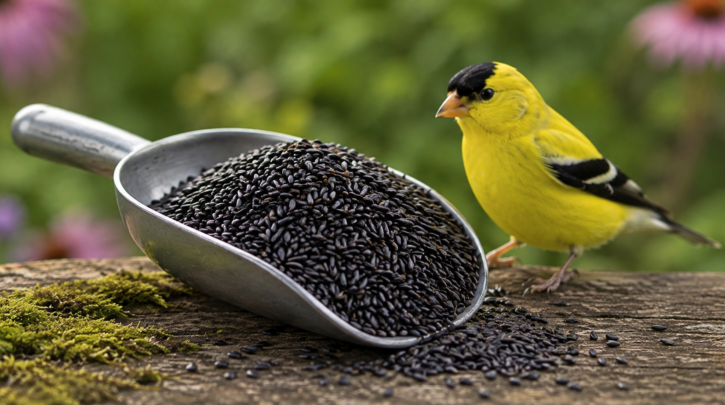

Nyjer, often still sold under its older common name “thistle,” is a small, oil-rich seed that goldfinches, siskins, and redpolls are drawn to more strongly than almost any other feeder food — but freshness matters here more than it does for almost any other backyard bird food.
What Nyjer Actually Is
Nyjer comes from an African daisy relative, not the thistle plants most people picture, though the older “thistle seed” name has stuck around in casual use. Most commercial nyjer sold in North America is imported, primarily from Ethiopia and India.
Why It’s Sterilized
Imported nyjer is heat-treated before entering the country specifically to prevent germination, a legal requirement intended to stop the seed from establishing as an invasive plant if it sprouts where it’s spilled beneath a feeder. This sterilization doesn’t reduce its nutritional value or appeal to birds — it’s purely a germination safeguard.
Freshness Is the Single Biggest Factor
Nyjer’s oil content, which is central to its appeal, degrades over time once the seed is harvested and processed. Old, stale nyjer loses much of what makes it attractive, and birds will often ignore a feeder filled with seed that’s been sitting too long even if the feeder itself is in good condition.
How to Judge Freshness
- Fresh nyjer looks glossy and uniformly black
- Stale nyjer looks dull, grayish, or faded rather than glossy
- Fresh seed should still have a faint oily feel when handled; genuinely old seed feels dry and dusty
Buying and Storage
Buy in a quantity realistic for your feeding pace over the next couple of months rather than a large bulk bag that will sit half-used for a season, since the seed loses appeal well before it visibly spoils. Store in a cool, dry, sealed container, away from direct sun, to slow the natural decline in oil content as much as possible.
Nyjer Blends
Some commercial blends mix nyjer with fine sunflower chips, broadening appeal slightly without changing the core feeding approach. These blends work well in a standard nyjer feeder and can draw a slightly wider range of visiting species than pure nyjer alone.
Signs a Feeder Needs a Refill, Not Just a Refresh
A nyjer feeder that’s seeing reduced activity despite birds clearly being present in the area is worth checking for staleness before assuming the birds have simply lost interest — in many cases, replacing old seed with a fresh batch restores activity within days.
Ready to pick a feeder built for this seed? See our nyjer feeder guide for the small-port designs that keep nyjer both accessible and protected from the elements.
Cost Considerations
Nyjer is generally more expensive per pound than black oil sunflower, reflecting both import costs and the more specialized supply chain behind it. Buying a moderate quantity sized to realistic consumption over a few months balances cost efficiency against the freshness concerns covered above, rather than either overbuying stale seed or running out too often.
Recognizing a Quality Supplier
A retailer with reasonably high product turnover, rather than one where bags may have sat in storage for an extended period, is more likely to offer genuinely fresh nyjer. Checking a package’s appearance through any clear packaging window, where available, before buying is a reasonable way to judge freshness even before opening it.
Nyjer and Weather
Because nyjer is such a small, light seed, it’s more prone to clumping or matting in humid or rainy conditions than a larger seed like sunflower. A feeder with reasonable weather protection, combined with periodically checking that seed inside hasn’t clumped into a solid, inaccessible mass, keeps a nyjer station functioning through wetter stretches of the year.
Why Some Yards Never See Much Nyjer Activity
Even with fresh seed and a well-designed feeder, nyjer-preferring species like goldfinch and siskin simply may not be common in every region or every year, particularly for the more nomadic species. Persistent low activity despite fresh seed and good equipment often reflects genuine local scarcity rather than any correctable setup issue.
A Reasonable Buying Rhythm
Many experienced hosts settle into a rhythm of buying nyjer roughly every one to two months during peak season, adjusting up or down based on how quickly a given batch is actually being used. This keeps seed reliably fresh without the waste and expense of buying more than a feeding station can realistically work through before quality starts to decline, particularly during slower stretches when local finch numbers are naturally lower than usual for the season.
Final Thoughts
Fresh nyjer, bought in a realistic quantity and stored properly, does more to attract goldfinches, siskins, and redpolls than any feeder upgrade could on its own — it is worth prioritizing seed quality well before spending more on the feeder itself.