
Attracting finches is more straightforward than most backyard birds — there’s no cavity to excavate, no nesting material to provide, no jelly to offer. It largely comes down to seed, plants, and patience.
Offer Both Nyjer and Sunflower
Because the five common species split between nyjer-preferring and sunflower-preferring groups, running both feeder types is the single most effective step. See our feeder guide and nyjer seed guide for the specifics.
Plant for Natural Seed Sources
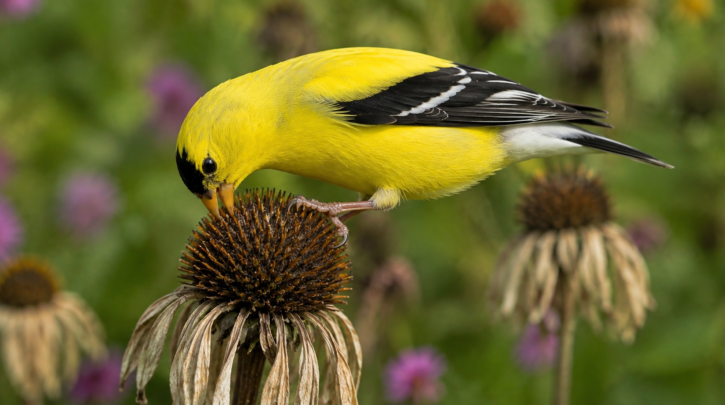
- Coneflower and Black-eyed Susan — classic goldfinch favorites, with seed heads that persist well into fall if left standing rather than deadheaded
- Sunflowers — both ornamental and food-crop varieties draw House Finch and Purple Finch directly to the seed heads once they mature
- Native, non-invasive thistle species — a natural nyjer-like food source without the invasive concerns of some non-native thistle varieties
- Birch and alder — valuable for Pine Siskin and Common Redpoll specifically, echoing their natural boreal forest diet
Leave Seed Heads Standing
Resisting the urge to deadhead or tidy up spent flower heads in fall genuinely pays off — a standing patch of coneflower or Black-eyed Susan left through fall and into winter can draw goldfinches directly to the plant itself, no feeder required.
Provide Water
A shallow water source for drinking and bathing rounds out a feeding station, particularly valuable during hot, dry stretches or frozen winter conditions when natural water sources can be harder to reach.
Provide Nearby Cover
Because finches feed in a fairly exposed position at most feeders, having shrubby cover within quick reach gives visiting birds a fast escape route from predators, which can make a feeding station feel safer and see more consistent, confident use.
Be Patient With Irruptive Species
Pine Siskin and Common Redpoll may show up in large numbers one winter and be almost entirely absent the next, depending on food availability farther north — see our migration guide for what drives this. Their absence in a given year isn’t a sign anything is wrong with a feeding setup; it simply reflects conditions well outside any single yard’s control.
Avoiding Common Mistakes
- Filling a feeder with generic mixed birdseed instead of nyjer or black oil sunflower
- Letting nyjer sit too long and go stale before replacing it
- Skipping regular feeder cleaning, particularly relevant given House Finch’s documented eye disease risk
- Deadheading native seed-producing plants before finches have had a chance to use them
Ready to put up your first feeder? Start with our nyjer feeder picks, then add a sunflower feeder for full coverage of all five common species.
Timing Your Setup
Unlike a migratory species with a specific arrival window to prepare for, finch feeding can begin at any time and simply builds in effectiveness the longer a feeding station stays consistently stocked and well maintained. There’s no wrong season to start, though winter generally sees the heaviest and most reliable activity.
What Success Looks Like the First Season
A new feeder may take anywhere from a few days to several weeks to be discovered, depending on how many finches are already present in the surrounding area. Once a flock does find a reliable station, return visits tend to become frequent and consistent, since finches are generally quick to establish a routine around a dependable food source.
Working With a Small Yard
Even a modest balcony or small urban yard can attract finches with just a single well-placed nyjer or sunflower feeder, since this family doesn’t require the mature trees, dead wood, or extensive habitat that some other backyard birds depend on for nesting. Finch feeding is genuinely one of the more accessible entry points into backyard birding for exactly this reason.
Combining Feeding With Nearby Habitat
Where space allows, combining a feeder with even a small native planting bed of coneflower or Black-eyed Susan creates a feeding relationship that continues even during stretches when a feeder itself might run low or need cleaning, giving finches an alternative food source that keeps them in the general area regardless of feeder status on any given day of the week or month.
A Rewarding, Low-Barrier Hobby
Few backyard birds reward a modest setup as reliably and quickly as finches do, making this family a genuinely good starting point for anyone new to backyard birdwatching who wants visible results without a large upfront investment in habitat or equipment, and without needing to wait an entire full season to see clearly whether the effort is genuinely paying off just yet.