
No single spring story applies to this family. House Finch is already deep into its breeding season while American Goldfinch is still months away from nesting, and whether Pine Siskin or Common Redpoll are even present at all depends entirely on the winter that just ended.
House Finch: Already Breeding
House Finch begins nesting earlier than most of the other species on this list, often by April, and given the multiple-brood pattern covered in our baby finches guide, some pairs may already be on a second attempt by late spring.
American Goldfinch: A Dramatic Color Transformation
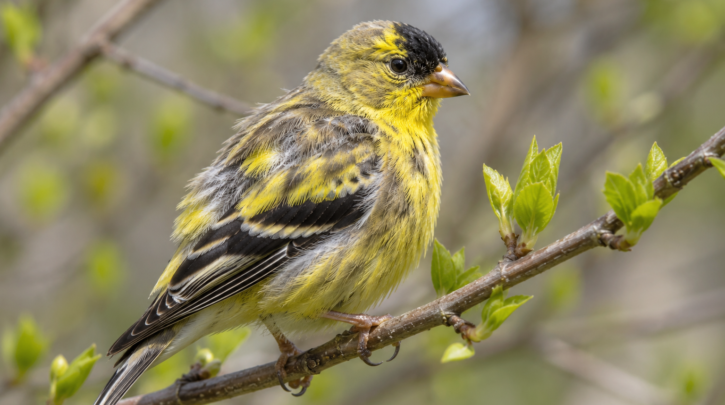
Spring is when male goldfinches molt out of their drab winter plumage into the vivid lemon-yellow breeding color covered in our identification guide — but don’t expect nesting yet. Despite this visible transformation, goldfinches won’t actually begin building nests until mid-to-late summer, as explained in our late-nesting guide.
Watching the Transition
The molt from winter to breeding plumage doesn’t happen overnight, and a goldfinch caught partway through can look genuinely patchy — blotches of vivid yellow mixed with the duller olive-brown of winter plumage still hanging on. This transitional look is normal and temporary, not a sign of illness or an unusual color variant.
Purple Finch: Returning Migrants
Purple Finch migrants return to breeding territory in spring, with males singing persistently to establish territory shortly after arrival. See our calls guide for what to listen for.
Pine Siskin and Common Redpoll: Departing North
If either species was present locally over the winter as part of an irruption, spring is when they begin heading back north toward breeding grounds in the boreal forest and Arctic. Exactly when they leave, and how far south they had come in the first place, varies with how severe that particular winter’s irruption was.
Feeder Activity in Spring
Keep both nyjer and sunflower feeders stocked through spring — House Finch demand stays high given active breeding, and any lingering irruptive species will still visit until they depart. See our feeder guide for setup details.
Curious what summer looks like once goldfinches are still waiting to nest? See our summer guide for what’s actually happening during that unusual gap.
A Family Moving at Different Speeds
Watching all five species side by side in spring is a genuine reminder that “breeding season” doesn’t mean the same calendar window for every bird — House Finch is already raising chicks while Goldfinch is only just finishing its color change, months ahead of its own first nest.
What to Watch For Each Week
Early spring is dominated by song and territory establishment for the migratory and resident species alike, while the most visually striking change — the goldfinch color transformation — unfolds gradually over several weeks rather than all at once, giving hosts a genuinely extended window to watch the transition in progress rather than missing it in a single quick change.
Feeder Cleaning Reminder
Spring is also a good time to start or refresh a regular feeder cleaning routine ahead of the busiest feeding months, particularly given House Finch’s documented vulnerability to eye disease covered in our eye disease guide. Beginning the season with a genuinely clean feeder sets a better baseline than trying to catch up once a problem has already developed.
Planting for the Season Ahead
Spring is also the right time to plant or expand native seed-producing plants like coneflower and Black-eyed Susan, covered in our attracting guide, since these plants need a full growing season to mature enough seed heads to matter by the time goldfinch nesting season actually arrives in mid-to-late summer.
Watching for the First Irruptive Departures
If Pine Siskins or Common Redpolls wintered locally, their departure in spring is often more gradual and less noticeable than their arrival was in fall, with flock sizes shrinking steadily over several weeks rather than the entire group vanishing on a single identifiable date.
A Reasonable Spring Checklist
- Confirm feeders are clean and ready before House Finch breeding activity peaks
- Watch for the goldfinch molt transition as a seasonal marker worth tracking year to year
- Listen for returning Purple Finch song if the species breeds or winters in your region
- Note when any wintering Pine Siskin or Common Redpoll flocks appear to have departed
Setting Expectations for the Months Ahead
Spring behavior across this family is really a preview of the widely varying pace each species will keep for the rest of the year, from House Finch’s already-underway breeding effort to Goldfinch’s long runway still ahead before its own nesting season finally begins.