
A nyjer feeder lives or dies by port size — too large and the tiny seed spills out constantly, too small and even a goldfinch struggles to extract it. See our full feeder setup guide for the design principles behind these picks.
What We Looked For
- Small, precisely sized ports built specifically for nyjer rather than general seed
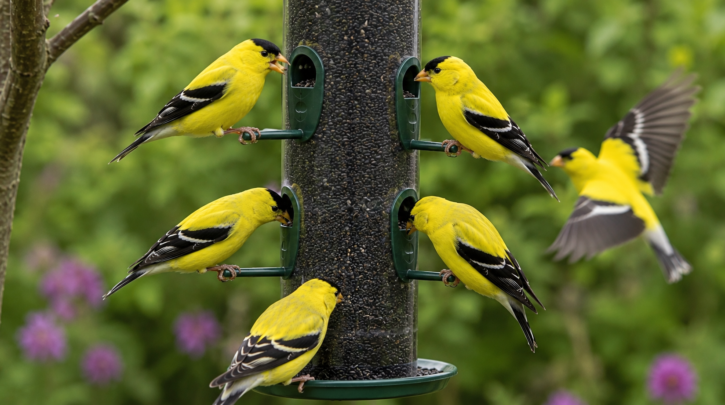
- Enough feeding positions to handle a full winter flock without excessive crowding
- Durable materials that hold up to repeated cleaning
- Reasonable weather protection to slow seed degradation
Duncraft Classic Nyjer Tube Feeder
An eight-port tube feeder with a seed-catching tray at the base, giving extra perching space while reducing waste on the ground below. At fifteen and a half inches tall and holding up to a pound and a half of nyjer, it strikes a reasonable balance between capacity and a manageable footprint for a typical yard.
See: Duncraft Classic Nyjer Tube Feeder
Duncraft Nyjer Mesh Sock
A metal mesh sock offering essentially unlimited clinging surface rather than a fixed number of discrete ports, letting several birds feed at once across the entire body of the sock. Its compact size makes it easy to hang multiple socks around a yard for more total capacity without needing a single large feeder.
Aspects 10-Port Finch Tube Feeder
A higher-capacity option built specifically for finch flocks, with ten separate feeding positions to reduce competition during the heaviest winter traffic. This kind of higher port count matters most during an active Pine Siskin or Common Redpoll irruption, when local finch numbers can spike well beyond typical levels.
See: Aspects 10-Port Finch Tube Feeder
Choosing Between Tube and Sock Styles
Tube feeders generally offer better weather protection and a longer working life, while sock feeders cost less and are simple to replace once they wear out. Running one of each is a reasonable way to get the durability of a tube feeder alongside the extra clinging capacity a sock provides during peak activity.
Ready to pair a feeder with the right seed? See our nyjer seed guide for what actually makes seed fresh and appealing once it’s in the feeder.
Cleaning Considerations When Choosing a Feeder
Given how directly feeder hygiene connects to House Finch eye disease risk, favor a design that disassembles easily for thorough cleaning over one that looks appealing but is awkward to take apart. See our cleaning supplies guide for what actually gets a nyjer feeder properly disinfected.
Capacity Planning for Irruption Years
Because Pine Siskin and Common Redpoll numbers can spike unpredictably during an active winter irruption, it’s worth choosing a feeder, or a pair of feeders, with more capacity than typical resident-species traffic alone would seem to justify, so a sudden influx doesn’t overwhelm a single small feeder within a single busy afternoon.
Mounting and Placement
Hang a nyjer feeder five to ten feet off the ground, near enough to natural cover that visiting finches have a quick escape route, but far enough from overhanging branches or structures that squirrels can’t easily jump directly onto it from above.
Comparing Total Cost Over a Season
A cheaper sock feeder may need replacing partway through a busy season, while a more expensive tube feeder can last several years with proper cleaning and care, so it’s worth weighing total cost across a few seasons rather than just the sticker price of a single feeder at purchase time.
When One Feeder Isn’t Enough
A single small nyjer feeder can genuinely become a bottleneck once local finch numbers grow beyond what its limited number of ports can comfortably support, leading to crowding and occasional squabbling between birds competing for the same few feeding spots. Adding a second feeder, even a modest one, often resolves this more effectively than upgrading to one larger unit alone.
A Final Word on Expectations
Even the best nyjer feeder can sit quiet for stretches if local goldfinch, siskin, or redpoll numbers are simply low that season — a reminder that feeder quality is only one part of a picture that also depends on regional finch populations and, for the more nomadic species, conditions well beyond any single backyard’s control.
Final Thoughts
A well-chosen nyjer feeder, kept clean and fresh, is the single highest-leverage purchase for attracting goldfinches, siskins, and redpolls — everything else in this guide is secondary to getting that one piece of equipment right first.