
Finch chicks develop on a diet that would be nutritionally inadequate for most altricial songbird chicks — almost entirely seed, delivered as a regurgitated mash rather than the whole or partial insects most nestlings depend on.
At Hatching
Newly hatched finches are altricial: blind, naked, and completely dependent on their parents. Because incubation is handled entirely by the female, as covered in our eggs guide, chicks typically hatch within a day or so of each other once the female begins full incubation after completing the clutch.
A Diet Almost Unique in the Songbird World
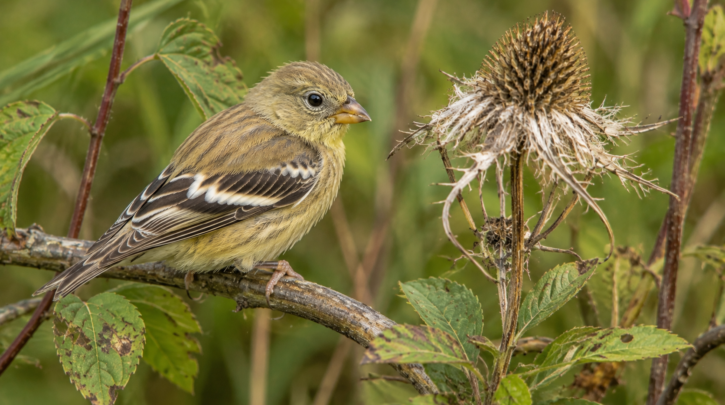
Parents feed chicks a regurgitated mixture sometimes described as “seed milk” — partially digested seed delivered directly from parent to chick. American Goldfinch takes this the furthest, feeding chicks an almost purely seed-based diet from the very first feeding, a genuinely unusual strategy among altricial songbirds, most of which rely heavily on insect protein during this stage even if the adult diet is largely seed-based.
Nestling Period
Most finch species fledge roughly 11 to 17 days after hatching, depending on species and conditions — faster than a woodpecker’s enclosed-cavity timeline, and broadly similar to the nestling periods seen in bluebirds and orioles.
Feeding Frequency
Both parents typically contribute to feeding once chicks have hatched, even though incubation itself was handled by the female alone, with feeding visits increasing in frequency as chicks grow and their combined food demand rises through the nestling period.
Fledging and Early Independence
Fledglings leave the nest capable of short flights but remain dependent on parents for one to three additional weeks while flight and foraging skills continue developing, a similar pattern to most of the bird species.
House Finch: Multiple Broods Per Season
Unlike American Goldfinch’s typically single, late brood, House Finch commonly raises two or three broods across a single season, taking advantage of an earlier start and a longer effective breeding window. This higher reproductive output is one of the factors that helped House Finch populations expand so successfully across the eastern United States after the species’ introduction there in the mid-20th century.
A Genuine Contrast Within One Family
Seeing House Finch and American Goldfinch side by side at the same feeder in July, one already raising a second or third brood and the other only just beginning its first, is a good reminder of how differently breeding strategy can play out even among closely related species sharing the same backyard.
If You Find a Fledgling on the Ground
A young finch found on the ground or a low branch, not yet flying well, is usually not abandoned — this is a normal transitional stage, and a parent is very likely nearby continuing to feed it. As with most fledgling songbirds, leaving it alone unless it’s in clear, immediate danger is almost always the right approach.
Want to help the next brood get a strong start? Revisit our attracting guide for the native plants that support both feeding and nest-lining needs.
Why an All-Seed Chick Diet Is So Unusual
Most altricial songbird chicks need the concentrated protein insects provide during their fastest growth period, which is exactly why so many otherwise seed-eating adult birds still switch to feeding chicks insects. American Goldfinch skipping this step almost entirely is a genuine biological outlier, made possible by the nutrient density of the seed sources available once the species’ delayed nesting season actually begins.
How This Affects Chick Growth Rate
Some research suggests seed-fed goldfinch chicks may grow somewhat more slowly than insect-fed chicks of comparable size in other species, though the species compensates with the extended nestling period and continued post-fledging parental care already covered above, rather than needing to match the faster growth timelines seen in more insect-dependent species.
Comparing Fledging Across the Other Species
A finch fledgling’s roughly two-week nestling period sits closer to a bluebird’s timeline than to either a woodpecker’s considerably longer, cavity-protected development or an oriole’s especially compressed schedule, placing finches solidly in the middle of the pack for developmental speed among the species.
Late-Season Fledglings
Because American Goldfinch nests so late, its fledglings are among the last young birds of the year to appear in most yards, sometimes showing up well into September in a mixed flock alongside adults already finished with the entire nesting process for the year well before that point in the calendar arrives.
A Reminder to Watch Late Into the Season
Because goldfinch fledglings appear so much later than most other backyard songbirds, it is worth continuing to watch feeders and seed heads well into early fall rather than assuming the nesting season has fully wrapped up simply because other species have already moved on.